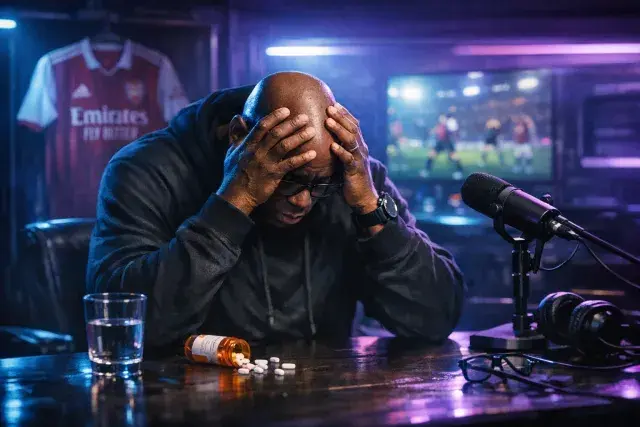
Ian Wright Reveals Emotional Toll of Arsenal's Performance Struggles

Arsenal legend Ian Wright has openly shared the profound emotional distress caused by the club's recent inconsistent results, describing it as "killing" him amid mounting pressure from rivals. This candid admission came during a heated discussion on The Overlap podcast, where Wright highlighted his deep personal investment in the team's efforts under manager Mikel Arteta. The revelation underscores the intense psychological demands placed on those closely tied to high-stakes competitive environments.
Heightened Anxiety Disrupts Collective Focus
Wright's frustration stems from observing visible edginess among the squad, marked by individual errors and a lack of conviction during key fixtures. He explained, "Watching the games, it hurts. There's a pain that's hurting me. It's killing me that I can't feel it. I've put so much, invested so much into the manager, the team, the players, everything. And they've got to a place again and you are just seeing it falling away, you're seeing players making mistakes." Such sentiments reflect broader patterns where sustained success breeds vulnerability to self-doubt, amplifying minor setbacks into perceived crises.
Former Captain Challenges Pessimistic View
Roy Keane dismissed Wright's concerns with characteristic bluntness, emphasizing that a six-point lead remains intact despite the turbulence. "It's not falling away yet. They're top of the table. They're nervous, they look edgy, but they have to get through that. Did you think it was going to be plain sailing? They've been nervous for six months?" Keane's response highlights a key tension in high-pressure pursuits: the expectation of discomfort as a prerequisite for achievement, rather than a signal of impending failure.
Injuries Compound Tactical Vulnerabilities
Arsenal's challenges intensify with a growing list of absences, including Noni Madueke, Bukayo Saka, Martin Odegaard, and Jurrien Timber, all sidelined by injuries. This crisis limits Arteta's strategic flexibility ahead of a pivotal encounter at Manchester City's Etihad Stadium, where the visitors confront a side unbeaten in 18 prior domestic outings. Persistent injury issues often erode confidence, fostering hesitation that manifests as uncharacteristic lapses in execution.
Psychological Pressures Shape Long-Term Outcomes
Experiences like Wright's confession reveal how emotional investment can blur into personal anguish when expectations clash with reality, a dynamic familiar in domains demanding peak consistency. Navigating such mental strain requires resilience, as Keane implies, yet unchecked anxiety risks cascading effects on performance. For those involved, processing these pressures openly—as Wright has done—may foster pathways to recovery, preventing a full unraveling of prior gains.